

A new report shows transgender and nonbinary (TGNB) youth whose pronouns are respected are less likely to attempt suicide.
Using data from the Trevor Project’s 2024 U.S. National Survey on the Mental Health of LGBTQ+ Young People, the findings indicate TGNB young people whose pronouns were respected had lower rates of past-year suicide attempts (11%) compared to those whose pronouns were not respected (17%). After controlling for demographic and other relevant factors, pronoun respect was associated with 31% lower odds of a past-year suicide attempt, the researchers say.
RELATED: New Study Reveals U.S. LGBTQ+ Youth Mental Health Crisis Is Worsening
The survey was taken by 12,174 TGNB youth between the ages of 13 and 24. It asked respondents about the pronouns they use, with 32% reporting binary pronouns (he/him or she/her), 26% reporting a combination of binary and nonbinary pronouns (he/they and she/they), and 15% reporting nonbinary pronouns (they/them).
Less Than Half of Transgender Youth Report Pronoun Respect
While pronoun respect is linked to lower rates of suicide attempts, less than half (46%) of TGNB youth reported that their pronouns were respected by a lot, most, or all of the people in their lives.
Levels of pronoun respect also varied by pronoun use. For example, TGNB young people who used binary pronouns reported higher levels of pronoun respect (62%) compared with their peers who used a combination of binary and nonbinary pronouns, nonbinary pronouns exclusively, or other pronouns (38%).
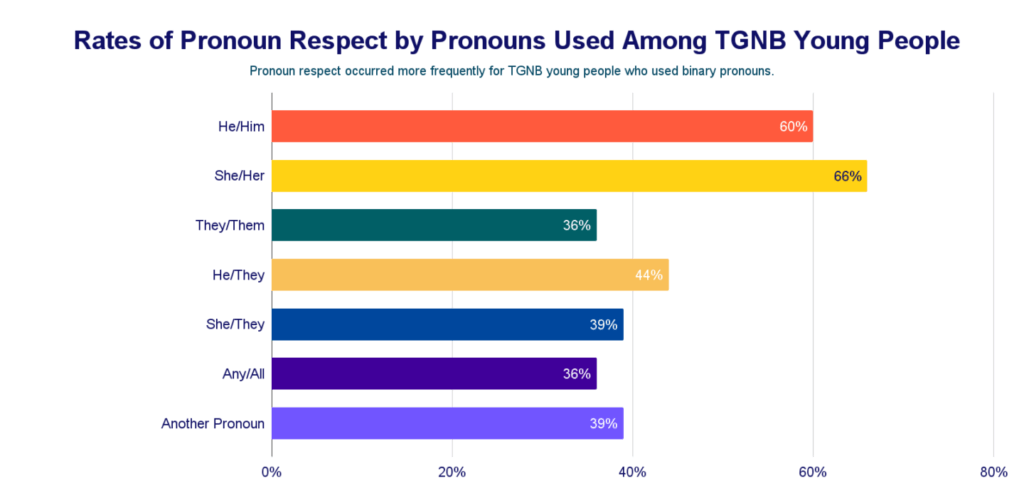
Image Source: 2024 U.S. National Survey on the Mental Health of LGBTQ+ Young People
The study also looked at rates of pronoun respect by several demographic groups and determined:
- Older TGNB young people (ages 18-24) were more likely to report pronoun respect (51%) than TGNB people ages 13-17 (40%)
- Middle Eastern/North African (57%) and White (48%) TGNB young people reported higher rates of pronoun respect than other racial/ethnic groups
- Heterosexual (66%) and gay (53%) TGNB young people were more likely to report pronoun respect than those of other sexual orientations
- Transgender boys/men (52%) and transgender girls/women (48%) reported greater rates of pronoun respect than those questioning their gender (40%), as well as nonbinary individuals (37%).
Read the full report here and read the extensive 2024 survey here.