
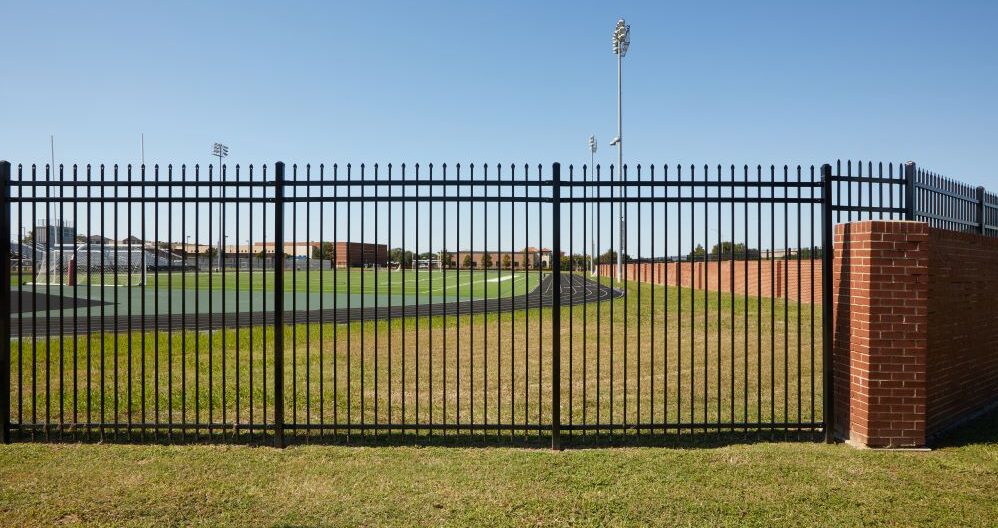
Often safer school design conjures images of school buildings that use advanced technology and building materials to deter, delay and deny violent intruders, from state-of-the-art surveillance systems to forced-entry resistance glass doors and windows. But enhanced school security begins at the perimeter fence, well before the building façade.
K-12 safety and security start at the district level and includes multiple layers and protocols for keeping faculty, students and visitors safe from violent threats, according to the Partner Alliance for Safer Schools’ (PASS) School Safety and Security Guidelines for K-12 Schools. Known as the multilayer approach to school security, it helps improve the overall efficacy of a comprehensive school safety and security plan.
Related Article: PASS Releases Update to K-12 School Safety and Security Guidelines
Considering data from the K-12 School Shooting Database reveals 80% of school shootings occur outside, having several physical security measures leading up to a school can be crucial to a comprehensive safer school design. Enhanced physical security at the campus perimeter can contribute to creating multiple barriers and security redundancies in subsequent layers for improved safety and security.
A Multilayer Approach to School Security Starts Physically at the Campus Perimeter
According to the PASS guidelines, safer school design begins with policies and protocols. These efforts include guidelines for access control, visitor monitoring, engaging with first responders, lockdown protocols and more. They set the pace for security measures that may be implemented on individual campuses.
PASS also separates school grounds into four distinct layers: classroom perimeter, building perimeter, campus perimeter and digital infrastructure perimeter. Each layer includes unique considerations and challenges to ensure security effectiveness and code-compliance. Although PASS separates these layers, it is important to understand that all four layers of physical security work together to form a unified front against multiple types of violent threats.
However, the campus perimeter can often be the first barrier an intruder encounters. At the campus perimeter, school administration can apply Crime Prevention Through Environmental Design (CPTED) principles, including the use of landscaping and security fences, to satisfy recommendations for a baseline of security.
Related Article: 5 CPTED Strategies That Protect Students and Staff
Subsequent measures like gates, video surveillance, security patrols and more can bolster the protective capabilities of this layer. When combined, these measures can provide an appropriate level of security to students and faculty while also creating a strong visual deterrent to would-be trespassers.
How to Select the Right Perimeter Fence
As written in the PASS guidelines, the campus perimeter can incorporate “the most outwardly visible security deterrents to an external threat.” When project teams select the right fence, they can establish a clear boundary and telegraph the level of security an intruder will encounter at subsequent levels. But what does the “right” fence look like? How can it enhance current security levels and lay the groundwork for future improvements?
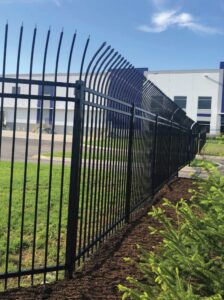
Galvanized and powder-coated steel fences resist corrosion and weather damage for a longer service life. Photo courtesy Fortress Building Products
School administrators and designers are encouraged to collaborate with security professionals when assessing the appropriateness of fencing options. With that in mind, often the look of a fence can be as important in creating a visual deterrent as its strength and engineering.
A tall fence that includes anti-climb features, like tightly spaced pickets or pales that curve outward at the top, can both delay trespassers and even stop them outright before they gain access to a school. When these fences also include tamper-resistant designs and difficult-to-access or security fasteners, they can further establish a strong stance against external threats. Finally, high-security fences that preserve open sightlines can help security patrols and front desk monitors more readily spot and respond to incoming threats, buying time for those in the school to engage in established safety procedures such as shelter-in-place plans.
Thoughtful fence design can strike a balance between security and school community aesthetics. Options like ornamental steel pickets and black powder-coated finishes can communicate strength without appearing oppressive, helping schools maintain a welcoming environment while still prioritizing safety.
Why Fence Strength and Engineering Are Key to Perimeter Security
Perimeter fences should have the strength and design to resist multiple forms of breaches. This can range from withstanding vehicular impact to defending against bolt cutters and other common tools. It can also include features that make climbing or sliding under a fence more difficult.
Related Article: Is Your School Addressing These Safety and Security Basics?
When it comes to strength, chain-link and wooden fences may not provide an adequate level of protection to achieve a school’s security goals. These options can be breached by both semi- and unskilled threats. For example, an external threat could cut or bend a section of chain link after school hours to allow easy access at the time of attack. Both fence options may also be vulnerable to ramming.
While initial investment in high-security steel fences may be higher than alternatives, the long-term benefits that include reduced maintenance, longer service life and stronger deterrence make it a more cost-effective and valuable choice. Powder-coated and galvanized finishes further extend a steel fence’s resilience to weathering and corrosion, minimizing future repair or replacement costs.
In addition, steel fences can more readily incorporate anti-climb features and rackable designs to bolster defenses at the top and bottom of the fence. Anti-climb features prevent or significantly slow scaling to allow school monitors to respond to external threats before they reach a school building. Likewise, rackable design allows fence panels to follow sloped terrain to mitigate gaps between the fence and the ground to further reduce potential points of ingress.
While initially steel security fences may cost more than alternatives like wood or chain link, the long-term benefits — including enhanced aesthetics, reduced maintenance, longer service life and stronger deterrence — make it a more cost-effective choice over the fence’s lifespan.
Integrating Fences with Other Campus Physical Security Measures
While strength and intelligent engineering are crucial to ensuring a fence can provide the utmost protection against unauthorized access, it is also important that these physical barriers work with other security measures to ensure a unified front against violent threats.
For instance, rackable design can work with berms and other anti-vehicle landscaping to limit access for threats, whether they are in vehicles or on foot. CPTED principles suggest that layered visibility (combining fence transparency, lighting and clear sightlines) improves surveillance opportunities while reducing the likelihood of concealed activity. Selecting steel fencing that aligns with these principles ensures the perimeter enhances both passive and active monitoring efforts.
Deter, Delay and Deny from the Property Line to the Classroom Door
It is well acknowledged that no single physical security measure will be 100% effective at stopping threats to life safety. While perimeter fencing can contribute multiple points of value for enhancing the overall level of safety and security on school campuses, it does not act alone. Next-generation perimeter solutions work with landscaping, active monitoring, building hardening and other security initiatives to create several obstacles to deter, delay and deny intruders.
Properly selected security fences provide measurable safety advantages—from limiting access to improving surveillance capabilities. Further, they do so without the often-unintended consequences of using less secure, less appropriate options.
When selecting a school security fence, look for these six features for optimal protection:
- Anti-climb design
- Tamper-resistant fasteners
- Rackable panels for varied terrain
- Powder-coated for weather resistance
- Ability to maintain clear sightlines
- Compatible with access control systems
A strong, well-engineered fence can serve as the first line of defense against external threats. Effective perimeter solutions can stop intruders or delay them long enough for students and faculty to alert first responders and engage lockdown procedures.
Eric Kell, Director of Commercial Sales at Fortress Building Products, has spent the past seven years in the fencing industry.