
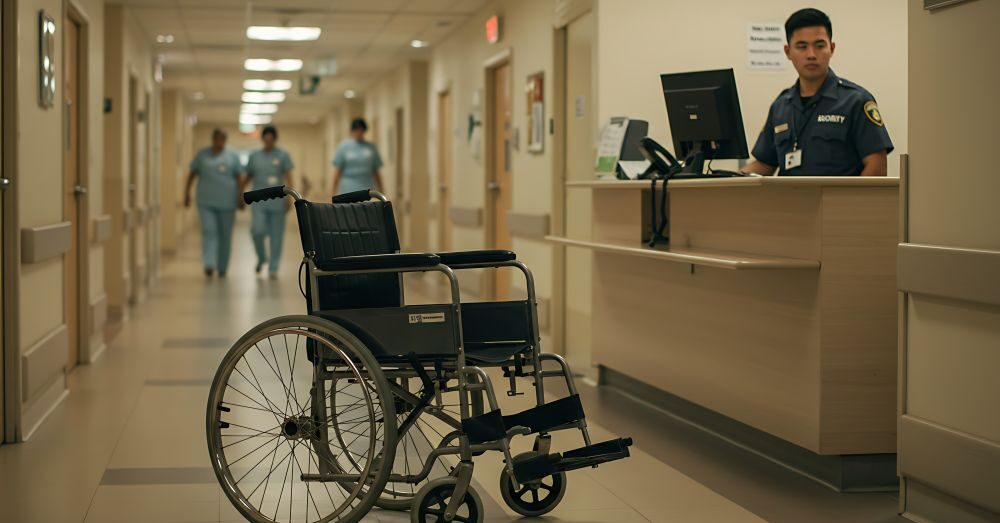
As we move into 2026, healthcare security leaders will face a converging threat landscape. One that is shifting from traditional “guards, guns, and gates” toward a highly integrated, technology-driven approach.
While patient care will remain the priority, security practitioners are facing a more aggressive threat environment, ranging from escalating workplace violence to accelerating cyberattacks that directly disrupt patient care.
Related Article: Workplace Violence Costs U.S. Hospitals Over $18 Billion Each Year, Study Finds
Here are the top physical security concerns for hospitals in 2026.
1. Escalation of Workplace Violence
Those of us in the industry know that healthcare workers are roughly five times more likely to experience workplace violence than employees in any other industry. In 2026, violence will no longer be seen as “part of the job” but as a foreseeable event that requires mitigation through both architectural and technological intervention.
Healthcare security practitioners should expect to see a surge in patients experiencing behavioral health issues. With the continuing mental health crisis and aging population, hospitals are seeing more high acuity patients with dementia or psychiatric needs in non-specialized units, including clinics.
The healthcare industry is also now being mandated to keep their employees safe. New regulatory standards and laws (such as those from The Joint Commission and the State of New York) now hold hospitals 100% accountable for protecting staff. This is driving a shift toward wearable duress buttons that allow caregivers to summon help to their precise location instantly.
Additionally, there is now greater focus on keeping weapons out of hospitals. Traditional metal detectors will continue to be replaced with AI-powered, less intrusive units that allow for “free-flow” entry without slowing down patients, visitors or caregivers.
Related Article: Weapons Detection Survey Finds Many Campuses Turning to Technology to Stop Gun Violence
Along with more technically advanced weapons detection, organizations will continue to move from paper logs to AI-integrated kiosks that cross-reference “no-entry” lists.
2. The Convergence of Cyber and Physical Security
One of the most significant shifts in 2026 will be the realization that data breaches often begin with physical security lapses. This will require organizations to see these overlapping risks as a single, enterprise-wide security and resilience problem, as opposed to separate physical and cybersecurity issues. Doing so will lead to significant benefits in areas such as threat detection and mitigation, while improving overall security and reducing costs.
Legacy RFID badge systems are increasingly vulnerable to low-cost cloning devices that can be found on sites such as Amazon and eBay. To combat this, organizations will begin moving to mobile credentials and access cards that use Fast IDentity Online (FIDO) authentication for higher-risk areas like pharmacies and server rooms.
With the proliferation of AI-driven medical tools, we are now seeing what is termed, “Shadow AI,” where unauthorized devices are plugged into hospital networks. Physically securing these endpoints and preventing unauthorized USB/hardware access is now a critical HIPAA requirement that security practitioners need to be aware of.
3. Modernizing Facility Access and ‘Choke Points’
Older hospital designs often feature numerous “blind” entry points that are difficult for security teams to monitor. In 2026, another focus will be on redesigns of the physical environment.
During the facility design process, security leaders will be involved earlier on to help address vulnerabilities, allowing organizations to cost-effectively address the security of new or renovated spaces. This change reflects the importance healthcare organizations place on the safety and security of caregivers and patients.
4. Securing the Supply Chain and Critical Infrastructure
Hospitals are high-value targets for ideological and geopolitical actors. As we saw in the recent attack on a UK hospital, ensuring the security of “life support” systems, such as oxygen farms, backup generators, and HVAC systems, will continue to be a growing priority.
5. Addressing Staffing Shortages
Hospital security departments, like other security verticals, face a difficult challenge: attracting qualified candidates in an evolving job market. This recruitment issue is not only a logistical one, but also a threat to a community’s access to quality healthcare.
Related Article: 8 in 10 Campus Public Safety Departments Don’t Have Enough Officers, New Survey Reveals
To meet the needs of their organization and the community, security leaders will need to embrace new, innovative strategies to attract candidates. This will likely include a greater reliance on digital marketing and connecting with Millennials and Generation Z on the social media platforms they frequent.
Organizations will also begin streamlining the hiring process, allowing candidates to complete multiple hiring steps in a single day, as opposed to several weeks.
Eric Sean Clay, MBA, CHPA, CPP is Vice President and Chief Security Officer of FMOL Health System.
Note: The views expressed by guest bloggers and contributors are those of the authors and do not necessarily represent the views of, and should not be attributed to, Campus Safety.