
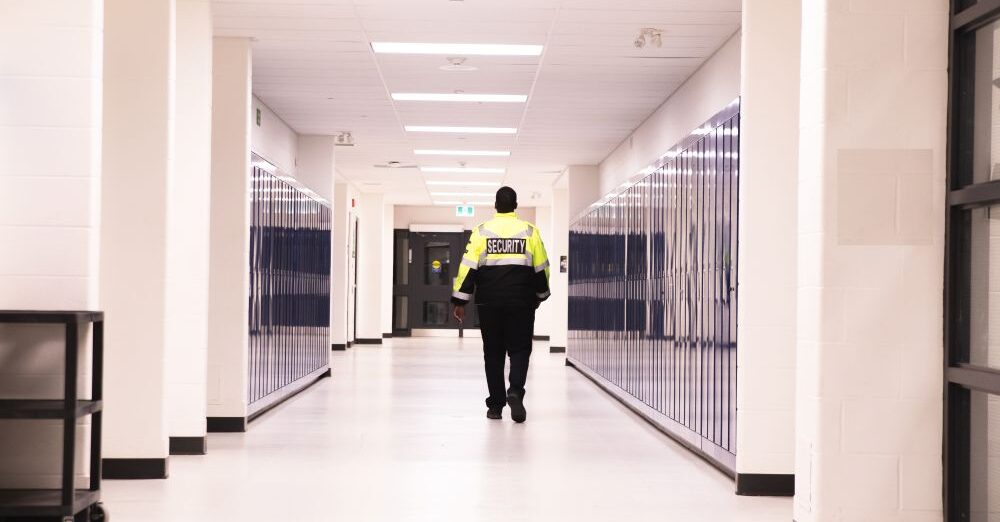
The rapid evolution of security technology over the past decade has been driven in large part by significant investment from private industry and private equity firms. These investors see a growing need for sophisticated, integrated solutions that enhance safety, streamline operations, and provide more reliable intelligence for decision-makers. For K–12 environments, this influx of innovation presents both tremendous opportunity and tremendous responsibility.
School security leaders must balance enthusiasm for emerging tools with a disciplined, mission-focused evaluation process. While technology can help schools respond to emergencies more effectively — and even prevent certain incidents altogether — each new solution must be assessed holistically to ensure it strengthens the safety ecosystem rather than adding complexity or false confidence.
As we look toward 2026, several technology trends are poised to shape how districts protect students, support staff, and manage daily operations. Perhaps the most significant shift is the rise of deeply integrated systems that allow for seamless communication, faster response, and more meaningful situational awareness.
1. The Next Era of Systems Integration
In 2026, school security technology will increasingly be defined not by isolated tools, but by the ability of those tools to function as a unified platform. The goal is intuitive usability for every stakeholder, from administrators to school resource officers (SROs) to parent volunteers.
Imagine a parent volunteer who notices a child having a seizure in a hallway. Instead of searching frantically for help, that volunteer could simply press their visitor badge to trigger an automated alert to the school nurse, administration, and even 911. Or consider an SRO receiving an automated notification that a fight is likely to occur in the cafeteria, before the first physical confrontation occurs, based on behavioral indicators captured through advanced analytics.
On-Demand Webinar: Effectively Deploying Panic Alarms During a Crisis
These aren’t hypothetical scenarios. With integrated alerting systems, real-time analytics, and improved data interoperability, they are fast becoming operational realities. Integration will also reduce labor-intensive processes such as responding to false burglar alarms. For example, combining video intelligence with robotics allows schools to verify incidents remotely without sending personnel across the campus unnecessarily.
And smaller frustrations will also be resolved. Students like “Little Johnnie,” who today may be flagged at a metal detector because he carries a three-ring binder, may soon pass through modern detection systems without the need for secondary screening.
2. Real-Time Location Technologies
Alyssa’s Law requires schools to implement silent panic alarms capable of directly notifying law enforcement continues gaining momentum across the country. As more states adopt the legislation, pressure is mounting for standardization and potentially a federal mandate.
In response, private industry has accelerated development of solutions that provide highly accurate, real-time location information alongside emergency notifications. Panic buttons are no longer stationary devices hidden beneath a front office desk. Instead, schools are moving toward wearable panic systems for staff, faculty, and even authorized visitors.
Related Article: Weapons Detection Survey Finds Many Campuses Turning to Technology to Stop Gun Violence
These devices can be geolocated anywhere on the property — inside buildings, in parking lots, or on athletic fields — and can integrate with camera systems to provide visual context. When activated, they can generate a digital map highlighting the incident location along with live video feeds.
This capability significantly improves response times for both on-site teams and public safety agencies. For example, emergency medical responders will no longer arrive at a school’s front office only to be redirected around the building. Instead, responders will have precise data showing where to park, which door to enter, and what to expect upon arrival. The result is a more efficient and prepared response during the most critical moments.
3. Advancements in Sound and Video Analytics
For more than five years, sound analytics have been used to identify aggression by detecting changes in tone, cadence, and vocal intensity. In 2026, these tools will be paired with increasingly sophisticated video analytics capable of recognizing behavioral patterns, detecting anomalies, and forecasting potential incidents.
Related Article: Strengthen Your Campus’ Video Surveillance with Audio Monitoring
Video artificial intelligence (AI) can identify disruptions in hallways or detect the early indicators of a fight in the cafeteria by learning the normal rhythm of school life. A system might learn what typical lunchtime traffic looks like, where students usually congregate, or when the cafeteria should be empty versus full.
If a crowd suddenly gathers in an unusual location, or a group of students stands up simultaneously in a way that deviates from established patterns, the system can generate an alert. When combined with sound analytics that detect aggression or elevated stress, these tools provide powerful early-warning capabilities. This allows staff to intervene proactively rather than reactively, reducing the likelihood of escalation.
4. Reducing False Burglar Alarms Through Intelligent Video
There is widespread adoption among municipalities and counties to impose fines for false burglar alarms. Traditional motion-based sensors are particularly susceptible to false triggers, whether caused by environmental changes, heating, ventilation and air conditioning (HVAC) systems, or harmless movement on campus.
In 2026, more schools will replace motion sensors with advanced video analytics to significantly reduce false alarms. Modern camera-based systems can differentiate between a person entering a building and a piece of student artwork swaying when the air conditioning cycles on.
Beyond preventing false alarms, these analytics can detect vehicles, bicycles, or individuals entering campus during nighttime or weekend hours. When paired with autonomous drones or robotic “dogs,” schools gain real-time situational awareness without requiring staff or law enforcement to patrol physically. Autonomous platforms can track a person of interest, relay live video, and even allow two-way communication, reducing unnecessary in-person responses and improving safety for all involved.
5. The Evolution of Weapons Detection
Metal detectors are rapidly being replaced by next-generation weapons detection systems capable of screening large numbers of students simultaneously while identifying threats with greater accuracy. These systems focus not only on metallic objects but on weapons of mass harm, using a combination of sensor technology, firmware advancements, and AI-driven software updates.
Over the next several years, we will see improvements in:
- Differentiation between benign items and actual threats
- Throughput, reducing wait times during student entry
- Environmental resistance, minimizing false alarms triggered by electrical or mechanical interference
These advances will make weapons detection more efficient, less intrusive, and more reliable.
Parallel to physical detection systems, video analytics for firearm detection continues to advance in accuracy and reliability. These tools can distinguish between a holstered weapon and a brandished one, alerting staff only when a legitimate threat is present.
Additionally, AI-powered systems can detect individuals carrying rifles in parking lots or outside the building perimeter sending automatic alerts over the schools paging system to initiate lockdown protocols. Depending on how a district configures the system, alerts can go directly to administrators, SROs, a district operations center, or even law enforcement after visual confirmation.
Considerations Before Adopting New Technology
While innovation is accelerating, school security leaders must remain disciplined in evaluating new tools. Before implementing district-wide solutions, consider the following principles:
- Consult Trusted Experts: Make sure you have a trusted security technology professional that has experience in schools for consultation, knowledge of the industry, and references for similar work.
- Pilot Before You Purchase: A controlled pilot program allows you to validate whether a technology performs effectively within your environment. What works in a vendor demo may behave differently on a busy campus.
- Understand Total Cost of Ownership: Beyond the initial purchase, be clear on annual licensing, maintenance fees, warranty options, and long-term replacement cycles.
- Stay Aligned with Your Security Plan: Avoid being distracted by impressive but non-essential features. Every new tool should clearly support your broader security management strategy. If that strategy is not yet well developed, consider resources such as the Partner Alliance for Safer Schools (PASS) guidelines before investing in technology.
The year 2026 promises to be a transformational period for school security technology. Integrated platforms, real-time location systems, advanced analytics, autonomous robotics, and next-generation detection tools all have the potential to dramatically enhance school safety, if implemented thoughtfully and strategically.
Ultimately, technology should enable staff to do what they do best: protect, support, and care for students. By evaluating emerging solutions with a critical, informed approach, school leaders can ensure that innovation strengthens their mission rather than complicating it.
Kevin Wren is a school safety advocate for A3 Communications and previously served as director of risk, security and emergency management for the Rock Hill School District. He was named K-12 Director of the Year by Campus Safety magazine in 2016.
Note: The views expressed by guest bloggers and contributors are those of the authors and do not necessarily represent the views of, and should not be attributed to, Campus Safety.